He always believed his home was a fortress. A quiet street, a neat lawn, framed photographs on the walls — everything suggested stability. No one could have imagined that behind those closed doors, something cold and deliberate had been growing.
That night, he woke to a strange smell — sweet and acrid, like melting plastic. Then came the heat. Not the comforting warmth of a home, but something harsh and suffocating. He opened his eyes and saw an orange haze crawling up the curtains. The bedroom door was locked from the outside.
At first, he didn’t understand. He stumbled from the bed, coughing, his lungs filling with smoke. The walls crackled. The ceiling began to darken and blister. He threw himself against the door, shouting, but there was no answer. Only the roar of flames and the slow collapse of everything he thought was secure.
When the firefighters finally pulled him out, he was barely alive.
The weeks that followed existed in fragments — white hospital lights, the sterile smell of antiseptic, the weight of bandages. He learned the truth not from her voice, but from a police officer standing awkwardly at the edge of his hospital bed. It had not been an accident. It had been planned. Accelerant poured along the floor. A locked door. A deliberate act.
He survived, but survival came at a cost.
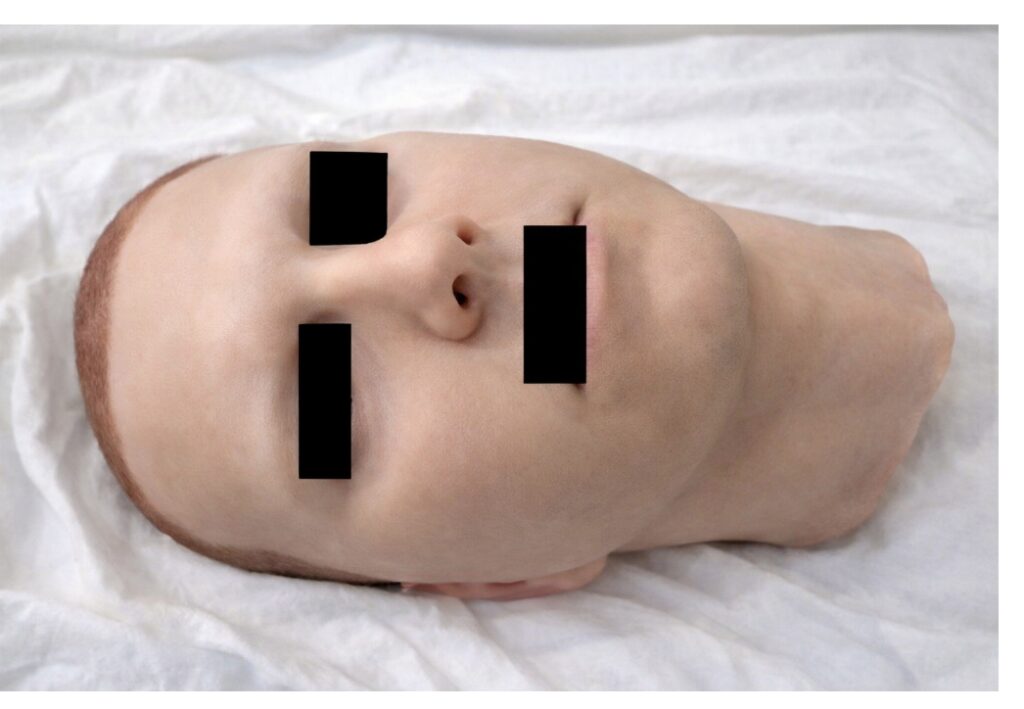
The burns took much of his face. Skin grafts covered what the flames had devoured. Mirrors were removed from his hospital room. When he finally saw himself for the first time — months later — he did not recognize the man staring back. The features were distorted, tight with scar tissue. One eye slightly lower than the other. Lips drawn thin. A stranger wearing his memories.Reconstruction began slowly. Surgeons mapped his face like architects redesigning a ruined building. Hours under anesthesia. The precise cut of scalpels. Transplanted skin. Tissue expanders. Pain measured not in screams, but in quiet endurance. Each operation brought small changes — a restored cheekbone contour, an eyelid that closed more naturally, a jawline reshaped.
It took a year before he could walk down the street without people staring openly. Two before strangers stopped looking twice.
During that time, she waited for trial.They said she had acted out of resentment — financial arguments, jealousy, suspicions that may or may not have been true. She claimed she hadn’t meant to kill him. That she only wanted to scare him. But accelerant doesn’t frighten. It consumes.
He attended the trial wearing a neutral expression, his new face calm and unreadable. She avoided looking at him. Perhaps she expected to see the broken man she left in flames. Instead, she saw someone unfamiliar — sharper, composed, controlled.
Justice, the court declared, would be served in years behind bars.But for him, justice had never been about prison.
Revenge did not arrive as violence. It arrived as patience.
He rebuilt his life carefully. New city. New work. New identity documents reflecting the surgeries that subtly altered his appearance. He invested wisely, worked obsessively, and spoke little about the past. The scars faded from red to pale silver lines — visible only if you looked closely.
Years passed.
When she was finally released, the world had forgotten her crime. Headlines fade. Neighbors move on. She stepped out expecting obscurity.
What she didn’t expect was opportunity.
The company that offered her a job seemed ordinary enough — a small design firm looking for administrative support. The pay was generous. The interviews brief. The director rarely appeared in person, she was told, preferring to manage from a distance.
On her first day, she was led into a sleek office with glass walls and quiet lighting. The man waiting behind the desk stood as she entered.
For a moment, she didn’t recognize him.
Why would she? The face was different — refined, symmetrical, composed. No obvious scars. No trace of the man she had left to burn.
He watched realization dawn slowly in her eyes.Recognition is not about features. It is about something deeper — posture, stillness, the way someone holds a room. She saw it then. The same eyes. The same silence.
“You look well,” he said evenly.Her hands trembled. The room felt smaller, the air thinner.He did not shout. He did not accuse. He simply explained.
“The firm was mine. The building was mine. The security contracts were mine. Every document you signed tied your employment, housing assistance, and financial stability to a network I controlled. Not illegally. Not violently. Legally. Meticulously.
I lost everything in that fire. My face. My name. My life. I had to rebuild from nothing.
Now you get to understand what rebuilding feels like. From the bottom.”
He didn’t threaten her freedom. He didn’t harm her. He did something colder: he ensured she would spend years working under the quiet authority of the man she tried to erase. Every promotion request, every leave form, every evaluation passed across his desk.Revenge, he learned, is not always fire.Sometimes it is survival.
Sometimes it is transformation so complete that the person who destroyed you no longer recognizes the result.
And sometimes the most terrifying thing for the guilty is not punishment — but the steady presence of the one who endured, standing stronger than before, proof that the flames failed.