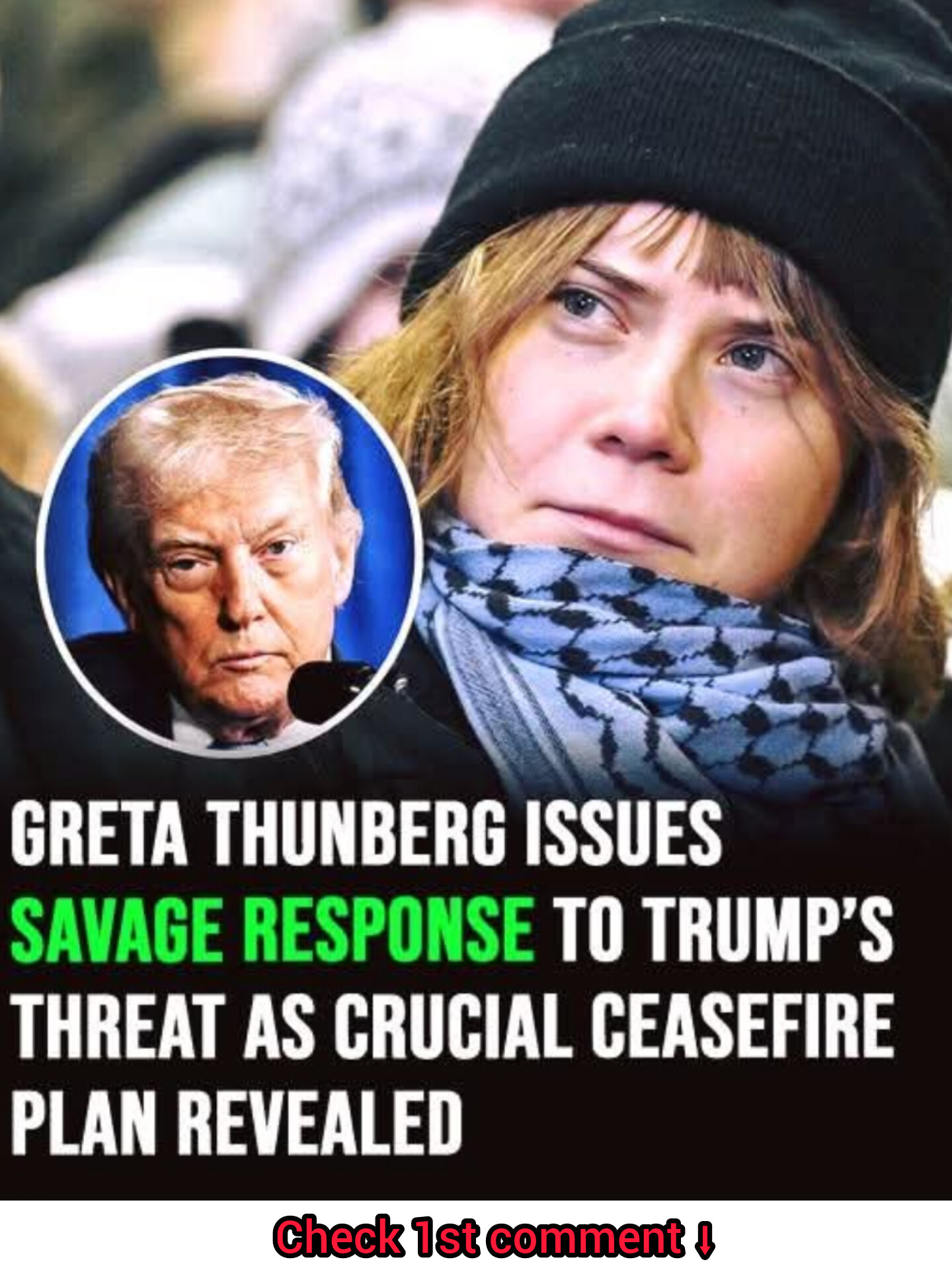
After more than a month of rapidly escalating military tensions, the United States and Iran have brokered a temporary, two-week ceasefire. But while the guns have paused in the Persian Gulf, a fierce rhetorical battle has ignited online, spearheaded by a stark clash between President Donald Trump and climate activist Greta Thunberg.
The Catalyst: A Civilization on the Brink
President Donald Trump played a central role in the diplomatic negotiations. However, it was his public statement that sent shockwaves across the globe. Framing the stakes in apocalyptic terms, Trump declared:
“A whole civilisation will die tonight, never to be brought back again.” While Trump noted that the two-week pause was a necessary period to finalize agreements that had already been largely settled, his aggressive rhetoric sparked immediate debate regarding the ethical implications of using threats of mass annihilation as a diplomatic tool.
The Outrage: Thunberg Breaks Her Silence
Taking to Instagram to counter Trump’s announcements on Truth Social, Greta Thunberg delivered a blistering critique of the international community’s passivity in the face of such extreme threats. She connected the looming military strikes to broader issues of environmental destruction and humanitarian catastrophe.
Expressing shock at the lack of global uproar, Thunberg stated:
“And no one is reacting. This speaks for itself. What the f** is anyone even doing at this point? We have normalized genocide, total annihilation of entire people, and environmental destruction.”*
She forcefully called out what she described as “corrupt, racist war criminals” who operate with impunity. However, her message ended on a rallying note, reminding the public that despite how much has been allowed to slide, “it is not too late to say stop.”
The Anatomy of the Ceasefire
Beyond the rhetoric, the 14-day truce has massive real-world implications that analysts and global markets are watching closely:
For the United States & The Globe: The pause avoids large-scale military engagement and civilian casualties. Furthermore, securing the strategic Strait of Hormuz promises to stabilize international financial markets, lower oil prices, and boost investor confidence.
For Iran: The temporary peace offers a desperately needed lifeline to stabilize its economy. It opens the door to potential relief from crippling sanctions and the unfreezing of restricted funds, alleviating the pressure on ordinary citizens.
The Peacemakers: Regional diplomacy proved vital. Intermediary nations, most notably Pakistan, played a critical behind-the-scenes role in urging restraint and bringing both sides back from the brink.
The Next Steps: Both nations are utilizing this time to de-escalate while maintaining defensive readiness. International observers, likely backed by UN representatives, are expected to monitor compliance closely to ensure provocations do not reignite the conflict before a permanent resolution can be drafted.
The Takeaway
The U.S.-Iran ceasefire serves as a masterclass in modern diplomacy, where the battlefields are split between military positioning and social media algorithms. While diplomats rush to turn a fragile two-week truce into lasting peace, Thunberg’s intervention serves as a stark reminder: the world is watching, and global citizens are increasingly demanding that leaders factor human survival and planetary well-being into their calculations of war.