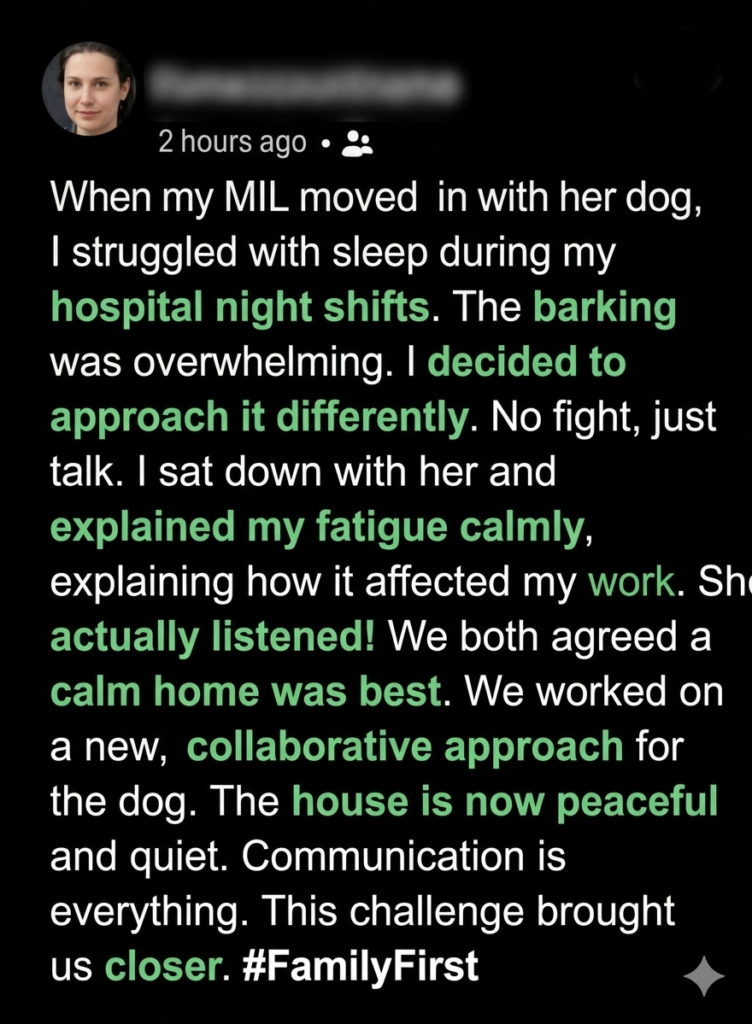
The first few weeks after my Mother-in-Law moved in with her energetic terrier, Buster, were, frankly, brutal. I work consecutive 12-hour night shifts at the hospital, and daytime sleep isn’t just a luxury for me—it’s critical for patient safety and my own sanity. Buster’s favorite activity, however, seemed to be holding a solo concert right outside my bedroom window from midnight until the early hours.
I remember one particularly rough night when I was utterly exhausted, my patience frayed thin. I had approached my MIL nicely a few times, asking if Buster could sleep in her room, but it always ended in dismissive comments about the dog “protecting us” or suggestions that I should “just adjust my schedule.” It felt less like living in a family home and more like living in a conflict zone.The original “challenge accepted” was strong in me back then. But after a few days of fuming and running on empty, I realized that approach would only lead to more stress and resentment. That wasn’t the home I wanted. As difficult as it was, I needed to approach this as a collaborative problem, not a battle.I decided to try a different tactic. Instead of bringing it up right after another sleepless night when my temper was short, I waited until we were both relaxed, having coffee on a quiet afternoon.
I started by acknowledging how glad I was that she was here and how important it was to me that she felt comfortable in our home. Then, I explained my perspective calmly. I didn’t blame Buster, but I talked about the actual impact the sleep deprivation was having on my work—the deep exhaustion, the fog that made critical decisions feel harder, and how crucial consistent sleep was for healthcare providers. I expressed that I wanted us both to be happy and for Buster to feel settled, but that the current situation wasn’t sustainable for me.To my surprise, removing the accusatory tone made all the difference. Seeing the reality of my exhaustion, rather than just hearing complaints, seemed to hit home. She admitted she hadn’t fully understood the gravity of it and had perhaps been a bit defensive.
Together, we sat down and researched solutions. Instead of demanding Buster move rooms, we looked into dog behavior and realized he might be anxious in a new environment. We agreed to try a compromise. I volunteered to take Buster for an active walk early in the evening to tire him out before my shift, and my MIL agreed to use some gentle calming aids recommended by our vet. More importantly, we made a commitment to consistent training. When he started barking late at night, she agreed to immediately and calmly redirect him, rather than letting it escalate.
It required effort from both of us. There were still a few noisy nights initially, but we stuck to the plan, reinforcing the training together. Within two weeks, the change was dramatic. Buster was calmer, the nighttime barking stopped, and I was finally getting the rest I needed.
The most amazing outcome wasn’t just the quiet house, though. Successfully navigating that difficult conversation, listening to each other, and working towards a shared goal transformed our relationship. It shifted from barely managing a conflict to building real trust and mutual respect. Now, we enjoy our shared coffee mornings, and I genuinely look forward to seeing her and Buster when I get home. What could have driven a permanent wedge between us ended up being the very thing that brought us closer together.