The fluorescent lights of the intensive care unit buzzed with a sickening, mechanical hum, casting long, pale shadows across the scuffed linoleum floor. I sat frozen in a rigid plastic chair, my hands trembling uncontrollably as I traced the worn stitching on Ethan’s leather wallet. A nurse with sympathetic eyes had handed it to me in a clear evidence bag after the ambulance brought him in, his skin the terrifying color of wet ash.
I had opened the wallet just to feel close to him, hoping to catch a trace of the motor oil and spearmint gum that always clung to his clothes. Instead, my fingers brushed against a tightly folded piece of heavy stock paper tucked behind his expired driver’s license, wedged next to a stack of crumpled pharmacy receipts.It wasn’t a photograph or a sentimental note. It was a formal letter from the financial aid office of the community college I was attending, rubber-banded to two years’ worth of unpaid medical bills in Ethan’s name.
The college letter confirmed that my “anonymous” full-ride nursing scholarship—the absolute miracle that had saved me from working myself into an early grave—wasn’t a scholarship at all. It was Ethan. He had been paying for my tuition in cash, month after agonizing month, while secretly ignoring the severe heart condition that had just sent him into sudden cardiac arrest on the concrete floor of a lumber yard.
Grief is a hollow, echoing thing. It hollows out your chest and leaves a void that wind whistles through. I learned that when I was seventeen, sitting on the wet curb outside my childhood home in Ohio while two police officers awkwardly explained that a drunk driver had crossed a center line and struck my parents’ sedan. In the span of a single, monotone sentence, my entire universe was erased.
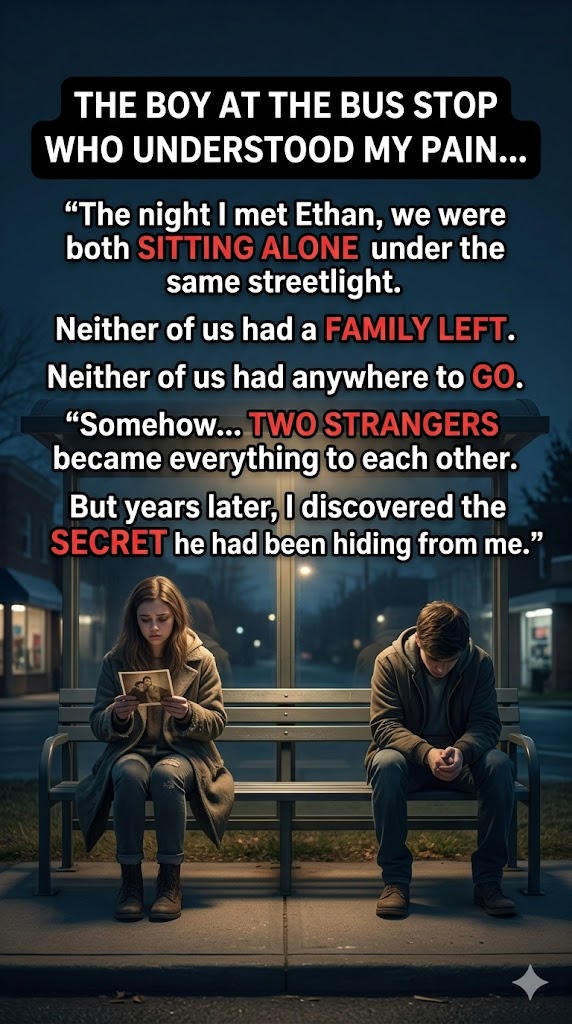
I aged out of the state foster system a year later, carrying my life in three black garbage bags and a heart so heavy I could barely stand. I moved to a cheap, decaying apartment complex in a factory town, waiting tables at a 24-hour diner and suffocating under the weight of an empty, terrifying world where no one was coming to save me.That’s where I met Ethan. It was a rainy Tuesday night at two in the morning.
He sat in the back booth of the diner, nursing a black coffee, staring out at the rain-slicked highway with an expression I knew intimately. It was the thousand-yard stare of an orphan. I accidentally spilled ice water across his table, and when he looked up, I didn’t see the anger I expected. I saw the same hollowed-out grief I stared at in my own bathroom mirror every morning. His parents had died in a devastating house fire when he was just ten years old.
He had bounced around violent group homes, hardening his exterior to survive the world, until he aged out, just like me.We didn’t exchange our tragic life stories right away. We simply started existing in the same quiet space. He would wait in his beat-up Ford truck in the diner parking lot until my shift ended at three in the morning, just to make sure I walked the four blocks to my apartment safely.
I started bringing him leftover cherry pie in styrofoam containers. The silence between us wasn’t awkward; it was a sanctuary. We were two ghosts haunting the same small Midwestern town, recognizing the phantom limb of lost family in each other.Friendship slowly, inevitably, blossomed into a profound, desperate love.
By the time I was twenty-one, we were sharing a drafty one-bedroom apartment above a noisy laundromat. We had absolutely nothing, but to me, we had everything. I worked as a cashier at a local grocery store during the day, scanning endless rows of canned beans and frozen dinners, and Ethan worked grueling hours at a wholesale lumber yard. We spent our evenings sitting on our rusted fire escape, splitting cheap ramen noodles, wrapped in a single quilt, and talking about a future that felt completely out of reach.
He was the one who pushed me to enroll in the local community college to pursue my lifelong dream of becoming a pediatric nurse. He told me I was too smart, too compassionate, to let my life stall behind a cash register. When I cried over the astronomical tuition costs, he simply kissed my forehead and promised we would figure it out.
A year into my program, the “miracle” happened. The financial aid office called to tell me an anonymous local donor had covered the rest of my tuition. I cried for hours on the living room floor. Ethan held me tight, smiling into my hair, telling me the universe was finally giving me the break I deserved. But shortly after that, Ethan started changing.
He picked up a second job doing night construction, then a third doing weekend landscaping. He was perpetually exhausted, his face gaunt and pale, his breath rattling wetly in his chest. When I begged him to slow down or see a doctor, he would deflect, claiming he was just trying to build a solid nest egg so we could eventually buy a small house with a yard. I believed him, completely oblivious to the tragedy silently unfolding right in front of me.
And now, sitting in the sterile hallway of the ICU, the puzzle pieces fell together with devastating, violent clarity. Ethan had a severe congenital heart defect—a ticking time bomb he had deliberately hidden from me. The daily medication he desperately needed to keep his heart beating steadily was exorbitantly expensive without insurance. When my nursing school tuition came due, he had made a choice.
He stopped filling his life-saving prescriptions. He worked himself into the ground, taking on physical labor his failing heart couldn’t handle, to pay for my future. He had sacrificed his own life in the process. He had literally given me his heart so I could learn how to heal others.A nurse finally stepped out of the double doors, her voice soft and heavy with pity.
“Olivia? You can see him now.”I walked into the dimly lit hospital room, the rhythmic, terrifyingly slow beep of the heart monitor the only sound. Ethan looked incredibly small amidst the chaotic tangle of IV tubes and wires. I collapsed into the chair by his side, gripping his cold, calloused hand, tears spilling hot and fast down my cheeks. After a few agonizing minutes, his eyelids fluttered open.
They were heavy with painkillers, but when his eyes found mine, a weak, deeply apologetic smile touched his pale lips.”You absolute idiot,” I choked out, unable to hold back my sobs as I held up the crumpled college receipt and the pharmacy bills. “Why? Why would you do this? You’re dying, Ethan. You’re dying for a stupid piece of paper.”He squeezed my fingers, his grip terrifyingly weak. “Not a stupid piece of paper,” he whispered, his voice a raspy struggle.
“Your dream. You lost everything, Liv. You deserved a future. I’m just… I’m just a guy who moves wood.””You are my family!” I cried, resting my head against his chest, listening to the fragile, uneven fluttering of his heart beneath the thin hospital gown. “You are all I have left in this world! What good is a future, what good is saving lives, if you’re not in mine to share it with me?
“A single tear slipped down his cheek, catching in the rough stubble on his jaw. “I didn’t want you to be alone again. If I go… I wanted to know you’d be safe. That you’d be someone.””I am someone because of you,” I told him fiercely, pressing my forehead against his, letting my tears mix with his. “And you are not going anywhere. Do you hear me? We survive.
That’s what we do. We survive together.”Ethan made it through the night, but the road ahead was terrifying. He was placed on the national transplant list the very next week, and the agonizing wait began. I immediately withdrew from my nursing program to work full-time and sit by his bedside, completely unbothered by the delay in my education.
A degree could wait. The boy who had traded his life for mine could not.Sitting in that sterile hospital room for months, watching the man I loved fight for every single breath, I realized something profound about the nature of love, grief, and survival. When you lose everything at a young age, the world tells you that you are permanently damaged. It tells you that you are a tragedy.
But looking at Ethan, holding his hand as we weathered the darkest storm of our lives, I knew that wasn’t true. We were two shattered, broken pieces of glass, but somehow, when we fit together, we caught the light.I learned the hardest, most beautiful lesson of my life in that hospital room. Family isn’t always who you’re born with—sometimes it’s the person who stays by your side when the rest of the world has gone entirely dark. And sometimes, the people who are the most broken are the exact ones who have the power to save us.