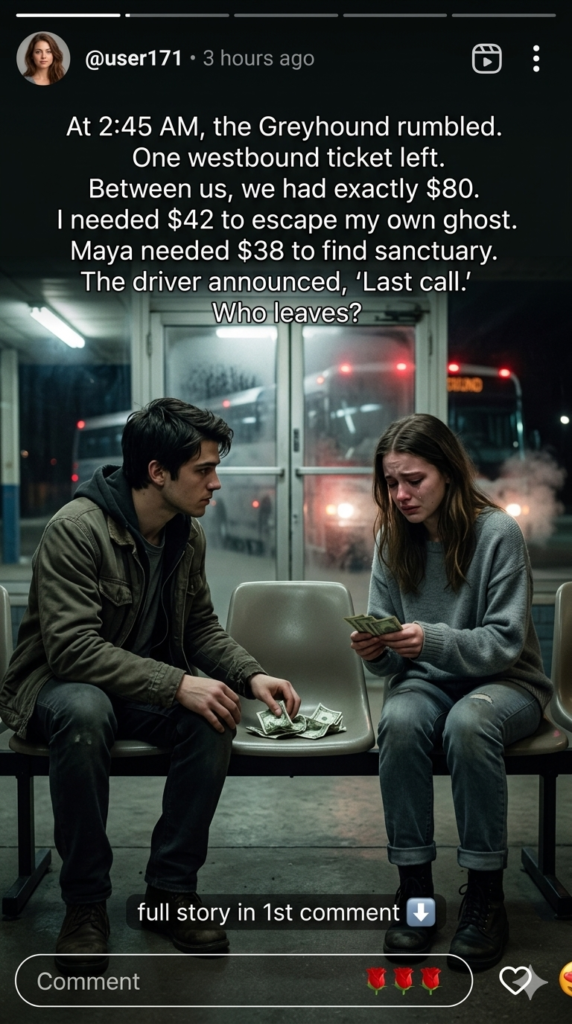
The buzzing of the flickering fluorescent light was the only sound in the downtown Detroit bus terminal, a hollowed-out cathedral for the forgotten. It was two in the morning, and the January wind howled against the frosted glass doors, threatening to break through. I sat on a hard, plastic chair, my hands buried deep in the pockets of a threadbare jacket.
Inside my right pocket was my entire net worth: forty-two dollars in crumpled bills and loose change. It was supposed to be my ticket out. For the last three years, survival in my father’s house meant shrinking myself into a ghost. I had learned to walk without making a sound, to speak only when spoken to, and to numb my own mind while his anger and addiction tore the drywall and our family apart. I had finally run, desperate to find a place where I could remember what it felt like to be a person. A few seats down sat the only other soul in the station. Her name, I would soon learn, was Maya. She was pulled tight into a ball, her knees tucked under a thin, faded gray sweater. Her hands trembled as she repeatedly counted a small stack of one-dollar bills.
### The Currency of Shared PainI didn’t mean to stare, but the desperate, frantic way she counted those bills drew me in. I walked over to the vending machine, fed it a dollar, and brought back two stale cups of black coffee. I held one out to her. She flinched at first, her eyes darting up to meet mine. They were exhausted, shadowed by a kind of grief I recognized instantly—the hollow look of someone who had watched their world burn to the ash. She took the cup, her fingers freezing against mine. “Thanks,” she whispered. “I’m Maya.””Leo,” I replied, sitting a seat away. “Waiting for the westbound?”She let out a breath that sounded like a dry sob. “Trying to. The ticket to Omaha is seventy-five dollars. I only have thirty-eight. I thought… I thought I had more, but the shelter took a cut for a blanket.”
As the bitter coffee warmed us, the guarded walls between us slowly thawed. In the dead of night, shared trauma acts as a bridge. Maya told me about the medical bills that had swallowed her life. Her mother had gotten sick, and the American healthcare system had worked with ruthless efficiency. The insurance denials drained their savings, the bank took their home, and the illness took her mother anyway. Left with nothing but a shoebox of medical debt and the clothes on her back, she had ended up on the streets. I told her about my dad, about the shattered glass on the kitchen floor, and the terrifying realization that if I stayed, I would eventually become him. For an hour, we sat in that freezing terminal, two discarded kids finding a fleeting, beautiful comfort in the fact that someone else finally understood the exact shape of their loneliness.
### The Price of a Future
At 2:45 AM, the intercom crackled to life. *“Now boarding, Greyhound to Omaha, Denver, and points west. Last call.”
*The heavy diesel engine of the bus rumbled outside, shaking the glass. Maya looked down at her thirty-eight dollars, a silent tear finally spilling over her lashes and cutting a clean path down her dirt-smudged cheek. She wasn’t going to make it. I put my hand in my pocket and felt the rough paper of my own forty-two dollars. Separately, we were both trapped in this dying city, destined to freeze on its sidewalks or return to the nightmares we were fleeing. But together, the math shifted. Seventy-five dollars. One ticket. One escape. My heart hammered against my ribs. My instinct—the feral, survivalist urge I had honed for years—screamed at me to keep my money, to wait another day, to save myself. But as I looked at Maya, clutching her mother’s cheap plastic hospital bracelet around her wrist, I realized something profound. I had run away to save my sense of self, but allowing her to freeze in this terminal while I hoarded my crumpled bills would destroy my soul faster than my father ever could. I pulled the money from my pocket, smoothed out the bills on the plastic seat, and slid them into her trembling hands. “Leo, no,” she gasped, her eyes widening in shock. “What are you doing? You need this. You can’t stay here.””I know how to survive the cold,” I said, offering a small, reassuring smile that hid my own terror. “But you need a place to live, Maya. You need to go be a person again. Take it.”
### The Wealth of the Broken
She threw her arms around my neck, sobbing into my shoulder with a fierce, crushing gratitude that I will carry in my bones for the rest of my life. I walked her to the boarding door, watching as she handed the driver our combined lifeline. As she stepped onto the bus, she looked back at me through the dirty glass, placing her hand against the window. I pressed my hand to the glass from the outside. The bus hissed, shifted into gear, and pulled away into the snowy night. I turned back to the freezing, empty terminal. My stomach growled with a sharp hunger, and the biting wind seeped right through my thin jacket. I had absolutely nothing left—no money, no ticket, no plan. Yet, as I sat back down on that hard plastic chair, my chest felt incredibly warm.
**The Moral Lesson**
We are often taught that generosity is a privilege of the wealthy, something to be given only from a place of surplus. But the truth is, the most profound acts of grace are born in the darkest corners of human suffering. Closure and healing don’t always come from saving ourselves; sometimes, they are found in the selfless act of saving someone else. The world can strip away your money, your home, and your family, but it can never take away your capacity to care. Sometimes, it is the people with absolutely nothing to give who end up giving the richest, most transformative love of all.