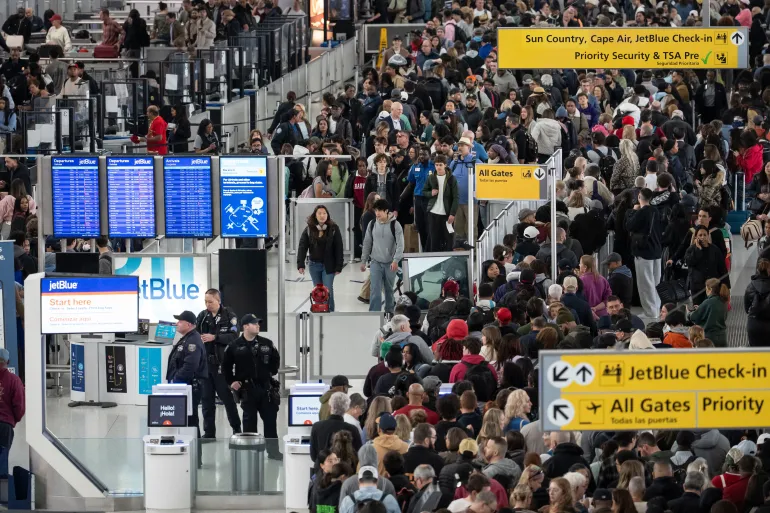
The United States is currently facing a major political crisis as a government funding deadlock has begun affecting everyday life—especially at airports. A dispute over funding for the Department of Homeland Security (DHS) has led to widespread disruption, leaving travelers stranded and workers unpaid. What was once a political disagreement in Washington has now become a visible national problem impacting thousands daily.
At the center of the issue is President Donald Trump, whose administration has taken a firm stance on immigration-related funding. Reports suggest that Trump is open to negotiating a deal, but only if certain immigration enforcement policies are included. This has made bipartisan agreement difficult, prolonging the shutdown and increasing tensions between political parties.
As the crisis deepens, airports across the country are experiencing severe delays and operational breakdowns. TSA workers, who fall under DHS, have reportedly missed paychecks, causing staff shortages and long security lines. In an unusual move, Immigration and Customs Enforcement (ICE) agents have even been deployed to assist at airports, sparking public debate and concern over civil liberties.
The political fallout is growing rapidly, with both Democrats and Republicans blaming each other for the situation. Citizens are expressing frustration over the government’s inability to reach a compromise, especially as travel disruptions worsen. Some lawmakers are pushing for temporary funding solutions, but no clear resolution has been finalized yet.
Meanwhile, this crisis comes at a critical time as the 2026 midterm elections approach. Political analysts warn that public dissatisfaction with leadership and governance could influence voting behavior. Polls already suggest that shifting public opinion may make upcoming elections highly competitive.
comIn the bigger picture, this situation highlights deeper issues within U.S. politics—ranging from immigration policy conflicts to partisan gridlock. As negotiations continue behind closed doors, millions of Americans are left dealing with the real-world consequences of political decisions, raising an important question: how long can the system sustain such deadlocks?